
Tags
animal free, arsenic, cruelty free, dairy free, edamame, fried rice, frozen meals, hijiki seaweed, japan, japanese, quick meals, review, seaweed, tofu, trader joe's, vegan, vegan review, veganism, vegetarian, vegetarianism
So…
It has been a few (four) months since my last post. Oooooops! My blog should be taken away from me due to neglect. I plan on getting back in the swing of things as soon as possible, but until then, enjoy this product review of one of my favorite quick meals.
Trader Joe’s is abundantly vegan friendly, if you know where to look. They are in the process of marking all of their explicitly vegan products with a large V, but if you look carefully, there are quite a few products that are inherently vegan and unmarked.
From the tiny island called the “Land of the Rising Sun,” this frozen frenzy of flavors is an expedient way to get a whole lot of nourishment.

Seriously, this product tastes like you are in a petite Japanese market with the briny breeze of the ocean wafting through the wooden slats. As you peruse the fresh seafood, you catch glimpses of fishermen dumping their plump nets into a rusty bucket. Fish flapping about, seagulls sailing overhead, waves washing up.
I have never been to Japan, but I have had numerous traditional Japanese meals, courtesy of my local Japanese club (don’t judge). The flourishing flavors of this dish are very impressive. One look at the ingredients and I could tell it was almost authentic. If you are looking for flavors from around the world, definitely check this dish out!
Ease of preparation is surprising.
Step 1: Heat some oil in a pan
Step 2: Stir fry the dish until warmed through
DONEZO!
Nutritionally, this meal is sufficient; the only drawback is the amount of sodium, so just offset that by drinking a lot of water with your meal.
My favorite part of this dish is the tofu; the texture and qualities of the stringy tofu are reminiscent of the egg that is traditionally in stir fry. I ate SO MUCH Chinese Take Out growing up that I am exceedingly familiar with this type of fried rice. I can’t help but to love this taste and texture. You know, that off-yellow scrambled mess that you see in your rice? IT IS DELICIOUS.
Oh, and the product actually resembles what is pictured on the front of the bag! It does say the typical “Serving Suggestion” and “Enlarged to show texture” but it is abundantly plentiful with the distribution of the edamame and carrots. Good on ya, Trader Joe’s.
The only drawbacks are: 1. It tends to get oily quickly, but if you do not use enough oil it definitely sticks to the pan. 2. The rice isn’t brown rice (I am a bourgeois, white, smoothie drinker, I know). 3. I do not have five more bags in my freezer right now.
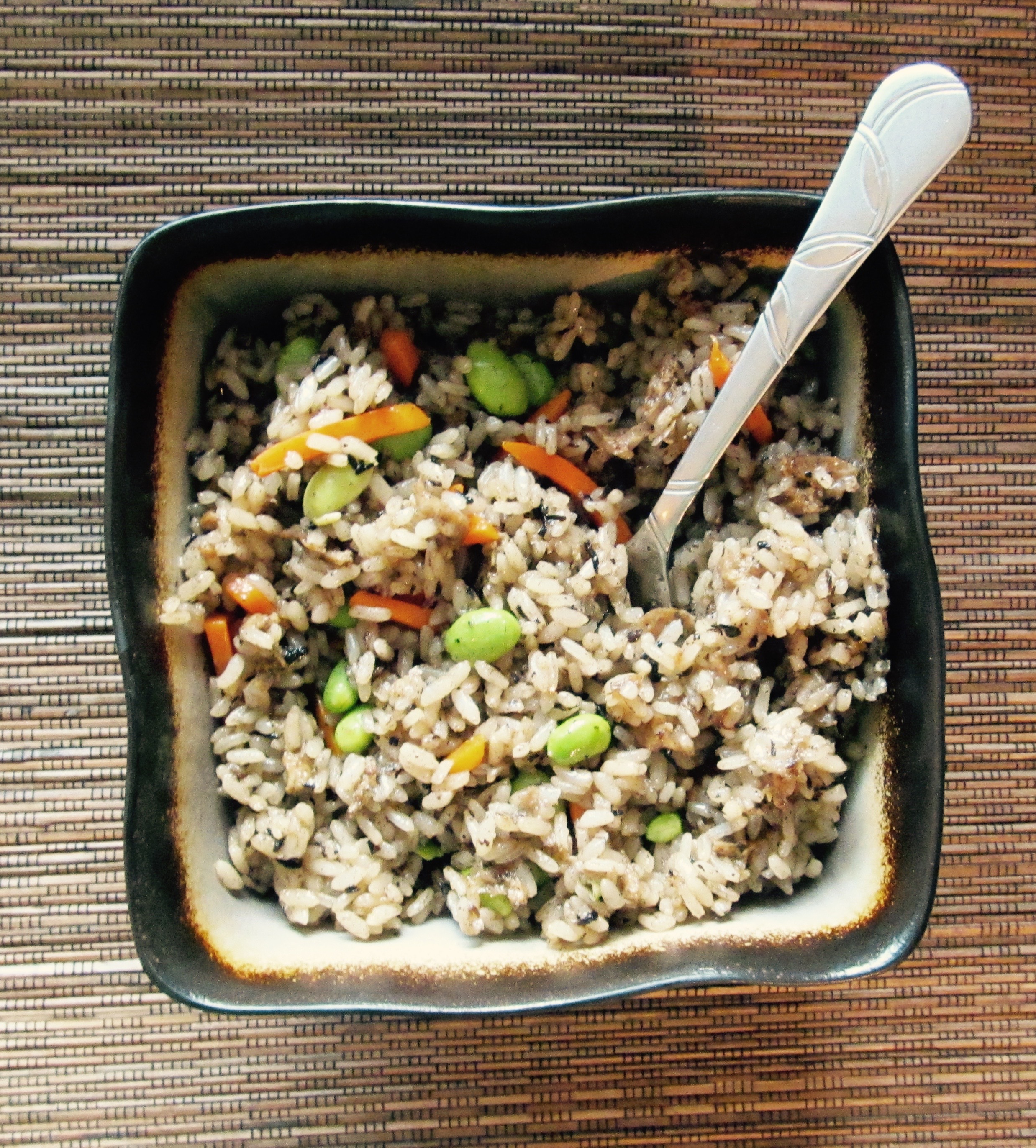
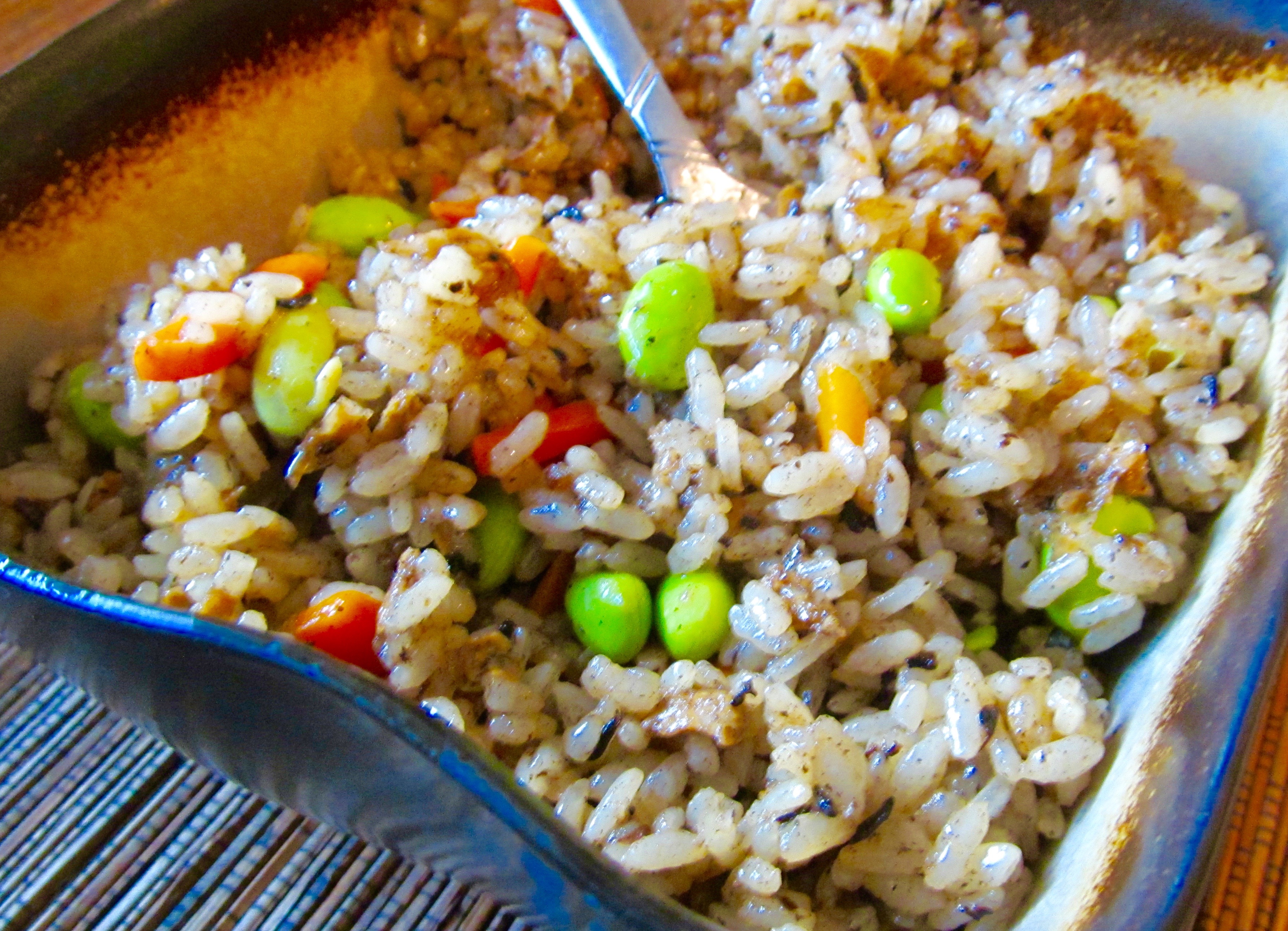
The Verdict:
Taste: 9/10
Texture: 8/10
Preparation: 9/10
Value: 8/10
Nutrition: 7/10
Quality: 9/10
Score: 85% B
Did you know?
Hijiki seaweed is a brown-colored seaweed grown on the rocky coasts of Japan, China, and Korea. It is harvested at low tide and used in common Japanese cuisine. It has potential health benefits due to the high levels of dietary fiber, calcium, magnesium, and iron. Japanese folklore lends to the belief that daily consumption of this long, stringy, brown seaweed aids health and beauty; supposedly, the key to long, lustrous, black hair is eating hijiki.
Some health concerns have arisen regarding some inorganic arsenic appearing in hijiki. Health agencies have proposed removing hijiki consumption from a daily diet. The Ministry of Health, Labour and Welfare of Japan has responded by acknowledging the fact that ingesting 4.7 g of hijiki is potentially dangerous, but the average daily consumption of Japanese citizens is only 0.9 g. Normal servings of hijiki would never reach the high level required for possible arsenic poisoning.
So yes, ingesting hijiki does place inorganic arsenic into your body. HOWEVER, arsenic levels also appear in fish, rice, and wine. So I am totally ingesting away! (I want long, lustrous, black hair!)















 Impoverished Vegan
